Retatrutide and Cardiovascular Risk Biomarkers
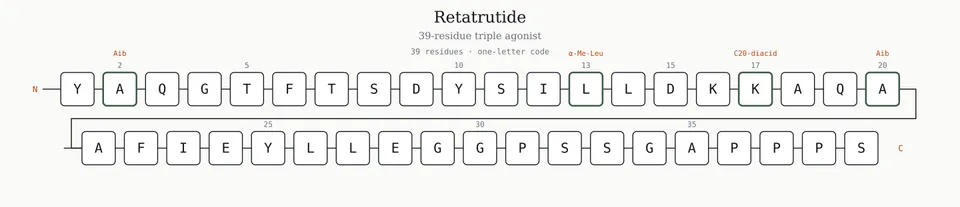
A new analysis published this week in Diabetes, Obesity & Metabolism adds to the growing picture of how retatrutide affects markers of cardiovascular risk in adults with obesity, with or without type 2 diabetes. The paper reports improvements across several cardiac-related biomarkers over the treatment period [PMID 42608321].
Why this matters
Retatrutide is a triple receptor agonist — it targets GLP-1, GIP, and glucagon receptors simultaneously. That mechanism separates it from the dual agonists that have dominated recent attention, and it means questions about metabolic and cardiovascular effects are central to how the compound may be positioned in research going forward.
The biomarker findings track a pattern seen in related work on incretin-based compounds: weight reductions accompanied by directional improvements in cardiovascular risk markers. What makes this particular report notable is the inclusion of patients both with and without type 2 diabetes, which gives the data a broader base than studies limited to a single population.
The broader context
Retatrutide has been the subject of a steady stream of publications over the past two years, and the literature is starting to move beyond simple efficacy questions toward mechanistic and safety-oriented analyses. A recent systematic evaluation of GLP-1 and dual GIP/GLP-1 receptor agonists examined psychopharmacological and putative neuropsychiatric effects, applying a Bradford Hill-informed framework to what is known so far [PMID 42624955]. That review is a useful reminder that the incretin class is now large enough, and well-documented enough, to support structured inquiry into effects that sit outside the headline metabolic outcomes.
What to keep in mind
These are observational and biomarker-level results, not definitive evidence of long-term cardiovascular benefit. Biomarkers can shift for reasons unrelated to the compound itself — changes in body weight, diet, and physical activity confound the picture. The value of this report is that it adds another data point to an accumulating body of work, and it does so in a population mix that reflects real-world use.
For researchers tracking the compound, the paper and its citations are worth reading alongside the earlier escalation studies, which remain the reference point for how dose titration has been approached in trials.