NAD+ Research Is Widening — and So Are the Questions
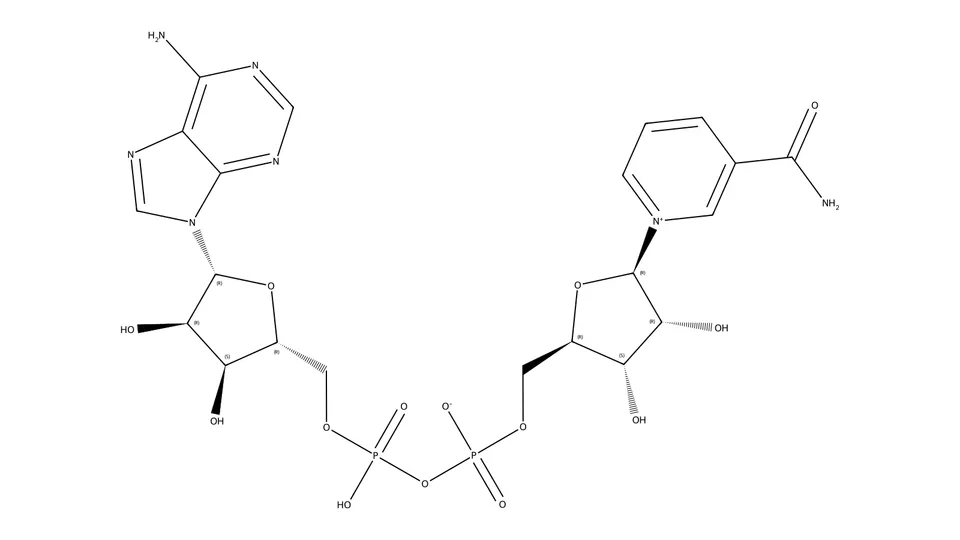
Nicotinamide adenine dinucleotide — NAD+ — has become a familiar name in longevity and anti-aging circles. The research pipeline behind that popularity is broader than the marketplace suggests. A cluster of new papers illustrates how the molecule keeps appearing in very different corners of biology.
Blood NAD+ dynamics under booster treatment
One new paper in Redox Biology examines blood NAD and glutathione levels in health, disease, and aging, including under NAD+-booster treatment [PMID 42628241]. Its relevance is practical: the relationship between supplementing precursors and measurable blood NAD+ is not a simple dose-response. Interindividual variation, baseline status, and the balance between NAD+ and glutathione all complicate the picture — a useful corrective to the assumption that more precursor means more NAD+ for everyone.
NAD+ metabolism and cancer
Two other recent papers look at the other end of the biology. One, in Molecular Cell, describes how nicotinamide nucleotide transhydrogenase couples redox homeostasis to proline biosynthesis in human glioma cells [PMID 42628532] — a reminder that NAD+ redox biology is intimately involved in tumor metabolism. Another reviews the design and therapeutic implications of SIRT6 activators and inhibitors [PMID 42628273], placing NAD+-dependent sirtuins at the center of an active drug-discovery effort in oncology.
Why this matters for researchers
The tension is worth naming clearly. In the consumer space, NAD+ is framed as a wellness target — something to restore with age. In the research literature, NAD+ biology is foundational: it is a cofactor in hundreds of enzymatic reactions, a node in redox balance, and a regulator of sirtuin activity that cancer cells exploit. The same molecule is being studied as a supplement and as a therapeutic target across oncology.
That dual identity should shape how anyone reads NAD+ claims. A paper showing NAD+ pathways matter in glioma is not evidence that supplemental precursors are harmless or beneficial in healthy people — it is evidence that the biology is consequential and context-dependent. And a paper on blood NAD+ dynamics under boosting is a reminder that even the basic question — do supplements raise NAD+ reliably — is not fully settled.
The pattern
NAD+ is a good example of why a research-first reading of any supplement category pays off. The molecule’s importance is beyond dispute. What is disputed — or simply unknown — is what changing its levels does in specific populations and contexts. The widening literature makes the nuance harder to ignore.