Kisspeptin Research Keeps Returning to the GnRH Neuron
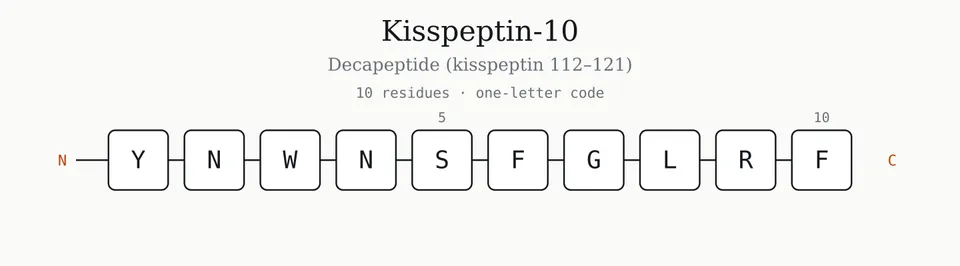
A review article published this month in Biology of Reproduction returns to a foundational question in reproductive neuroendocrinology: the role of estrogen receptor expression in GnRH neurons [PMID 42096529]. The paper sits in a long research line that began with kisspeptin’s discovery as a critical regulator of GnRH secretion, and it is a useful reminder that the compound’s scientific importance predates its commercial profile.
Why kisspeptin matters in the literature
Kisspeptin neurons sit upstream of GnRH neurons in the reproductive axis. They are the pulse generator, so to speak — the kisspeptin signal to GnRH neurons is what drives the release of the hormone that ultimately controls reproductive function. That makes kisspeptin an unusually well-defined research target: its role is established at the mechanistic level, which is more than can be said for many research peptides.
The new review examines how estrogen receptors in GnRH neurons shape the response to kisspeptin signaling. The topic is dense, but the takeaway for a general research audience is straightforward: the kisspeptin-GnRH interplay is modulated by steroid feedback, and the details of that modulation continue to be worked out.
The research-versus-supplement gap
Kisspeptin is sometimes discussed as a research compound with potential applications in fertility and reproductive function. The literature does support an important role in the reproductive axis, primarily from animal and early human physiology studies. What the literature does not yet support is a settled protocol for use — the translational work is genuinely young.
That gap between a well-characterized mechanism and an unproven application is exactly what a research-first publication should highlight. Understanding why a compound matters mechanistically is not the same as knowing what to do with it.
The takeaway
For anyone tracking kisspeptin, the useful frame is the same as for most compounds covered here: the basic science is real, the mechanistic place is clear, and the applied evidence is still being built. Reviews like this one add resolution to the mechanism; they do not resolve the application question.