GHK-Cu: Human Evidence vs. Preclinical Claims
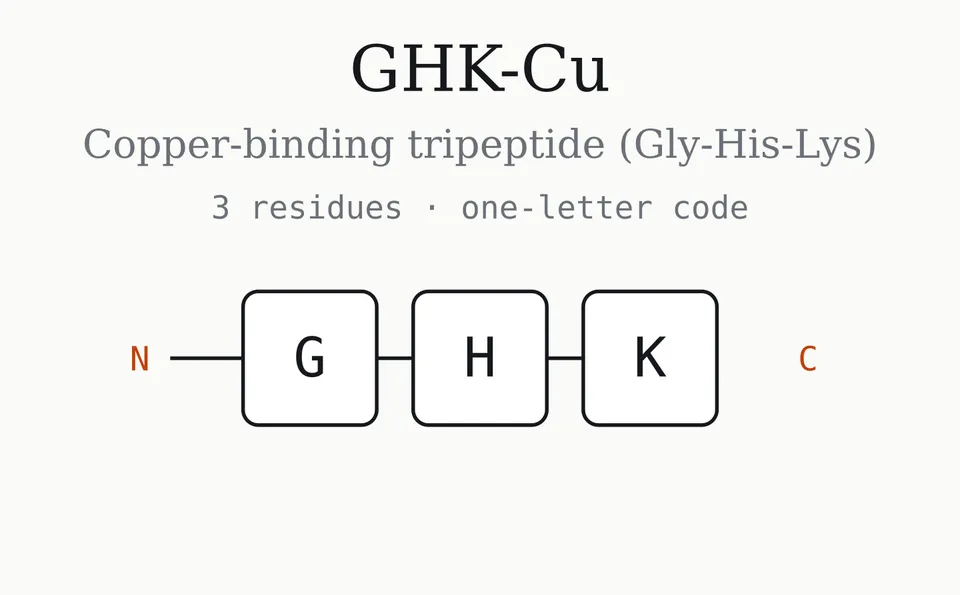
GHK-Cu (copper tripeptide-1) occupies an unusual position in the peptide space: it is one of the few compounds that moved from laboratory research into commercial cosmetic use decades ago, yet its most ambitious claims — tissue regeneration, wound repair, anti-aging effects — still rest mostly on preclinical work.
What happened this week
A new review in the Aesthetic Surgery Journal examines GHK-Cu’s regenerative potential specifically in aesthetic medicine, surveying the collagen-stimulation and wound-healing literature that has accumulated over several decades [PMID 42619529]. The review is a useful map of where the evidence stands, partly because it makes clear how uneven the evidence base is.
The evidence tiers
- Cell and animal studies: the majority of GHK-Cu research. These show the peptide influences collagen production, matrix remodeling, and cell migration in vitro and in animal wound models. They are the foundation of the mechanistic argument.
- Human skin-application studies: a smaller but real body of work, mostly in topical aesthetic applications. These support improvements in skin appearance and some wound-healing endpoints, but they are often small and industry-influenced.
- Injectable / systemic use in humans: largely absent from the peer-reviewed literature. Claims about systemic GHK-Cu for tendon repair, ligament recovery, or whole-body regeneration rely on extrapolation from the topical and preclinical data.
Why this distinction matters
The gap between “this peptide does X in a dish” and “this peptide does X in a human shoulder” is the single most important filter for evaluating any research compound. GHK-Cu’s commercial history makes the filter easy to forget — the compound has been sold for decades, which creates the impression that its effects are established.
They are not, in the systemic sense. The plausible biology deserves investigation; the absence of controlled human studies for injectable use is a fact, not a nitpick. Any description of GHK-Cu that does not separate these tiers is overstating the record.
The takeaway
GHK-Cu is a good case study in reading peptide claims. The mechanistic literature is real, the topical human evidence is real but modest, and the systemic human evidence is essentially open terrain. Those three statements are compatible — and keeping them separate is the difference between analysis and promotion.